

On 14th February 2026, we began our journey at 2:10 p.m. from Tshongdu town in Paro, driving uphill for about thirty minutes toward Latikha Goemba (Monastery). The winding mountain road gradually lifted us above the valley floor, offering glimpses of terraced fields and scattered farmhouses clinging to the slopes. By 2:38 p.m., we arrived at Latikha Goemba and prepared to begin our hike. The air was crisp, and the anticipation of what lay ahead energized us despite the steep terrain.
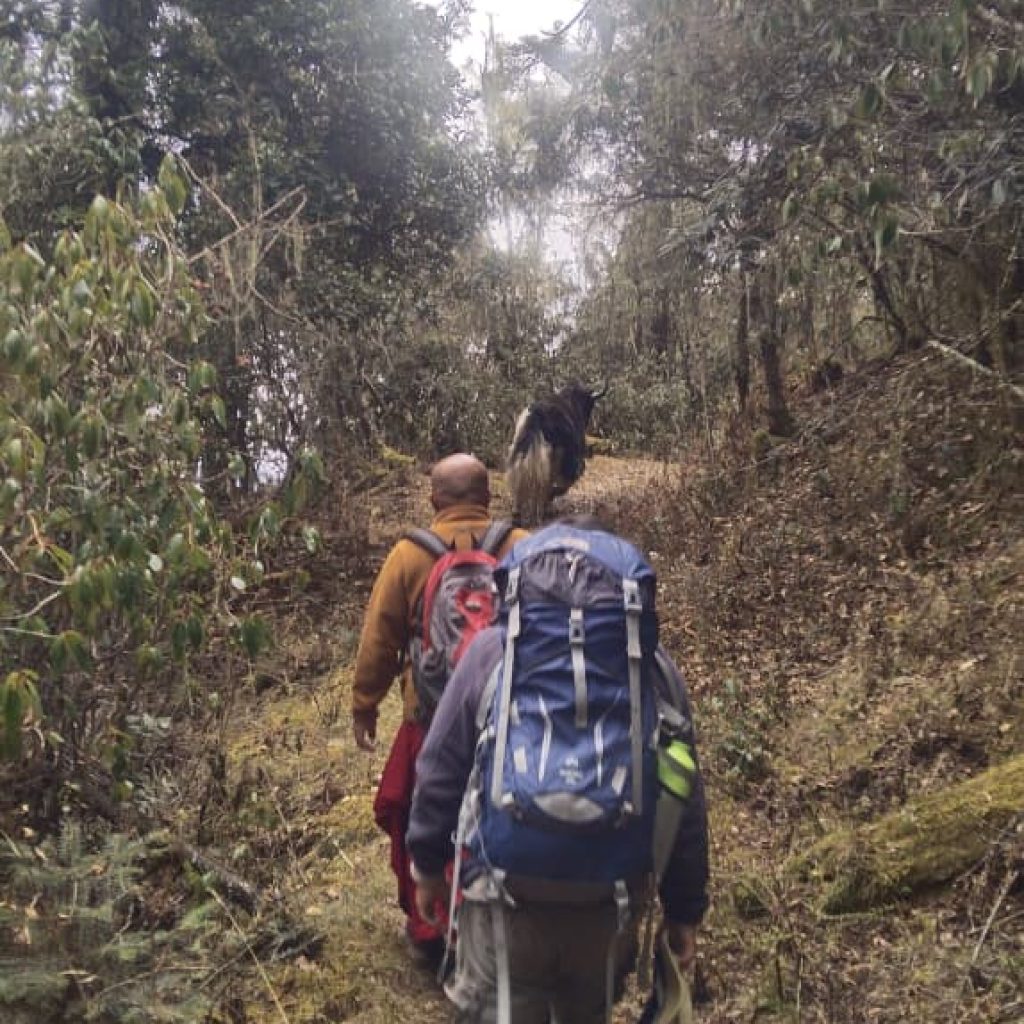
We started trekking immediately, following a narrow forest trail that climbed steadily through pine and rhododendron woods. After one hour and thirteen minutes of hiking, we reached a designated rest point. The ascent had already tested our stamina, so we paused for a few minutes to catch our breath and sip some water. The mountain silence was broken only by the rustling of leaves and distant bird calls. Refreshed, we resumed our climb toward Dho Chorten Goemba.
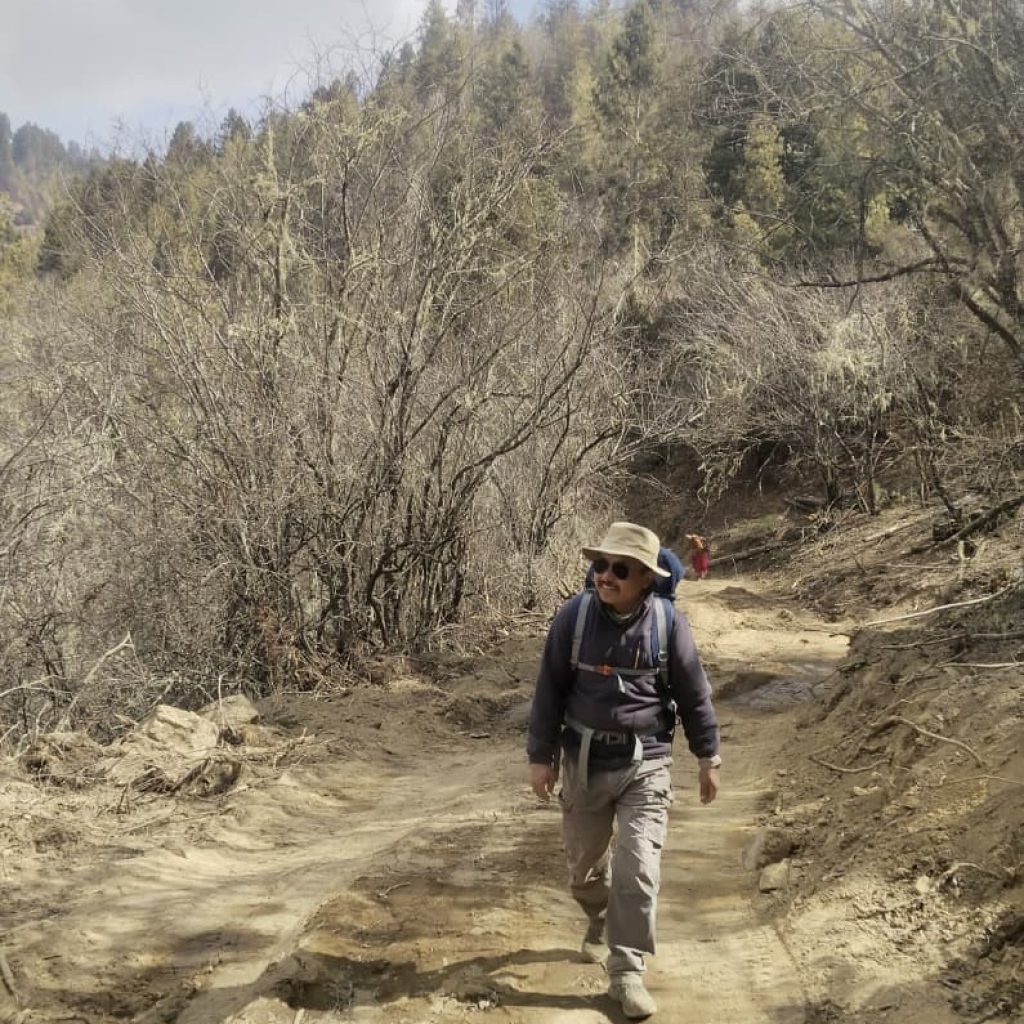
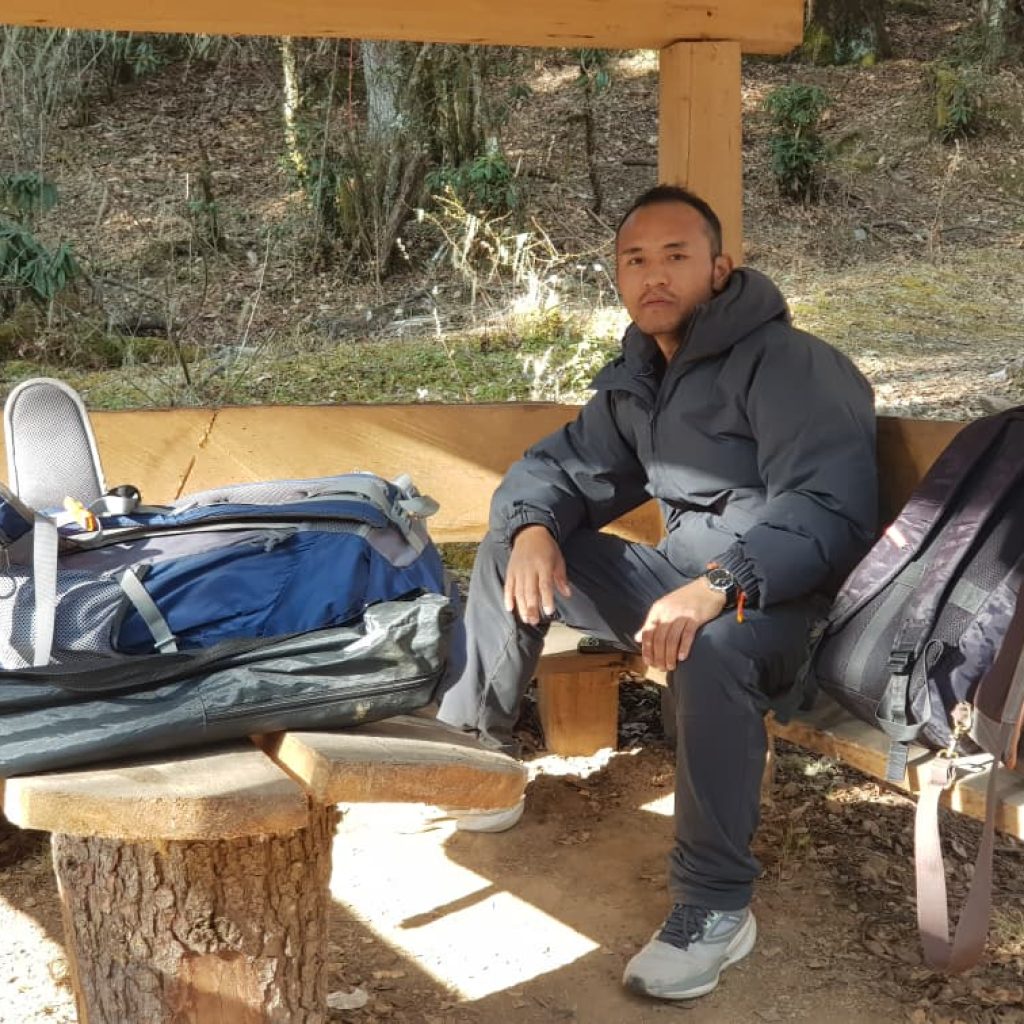
At 4:23 p.m., we finally arrived at Dho Chorten Goemba, where we were warmly welcomed by the resident Lama. He greeted us with gentle hospitality and offered us cups of sweet milk tea along with sugary snacks. The warmth of the tea and the quick energy from the snacks helped us adjust to the altitude and regain strength after the demanding hike. The Lama’s kindness immediately made us feel at home in the remote mountain setting.
Without wasting time, we unpacked our cameras and followed the Lama to a carefully selected observation spot. He instructed us to set up our equipment and remain absolutely still. He explained that the birds we were hoping to photograph were extremely sensitive to unfamiliar presence. As strangers carrying large cameras with long lenses; equipment that could easily resemble weapons, we posed a potential threat in their eyes. Therefore, absolute stillness and patience were essential.
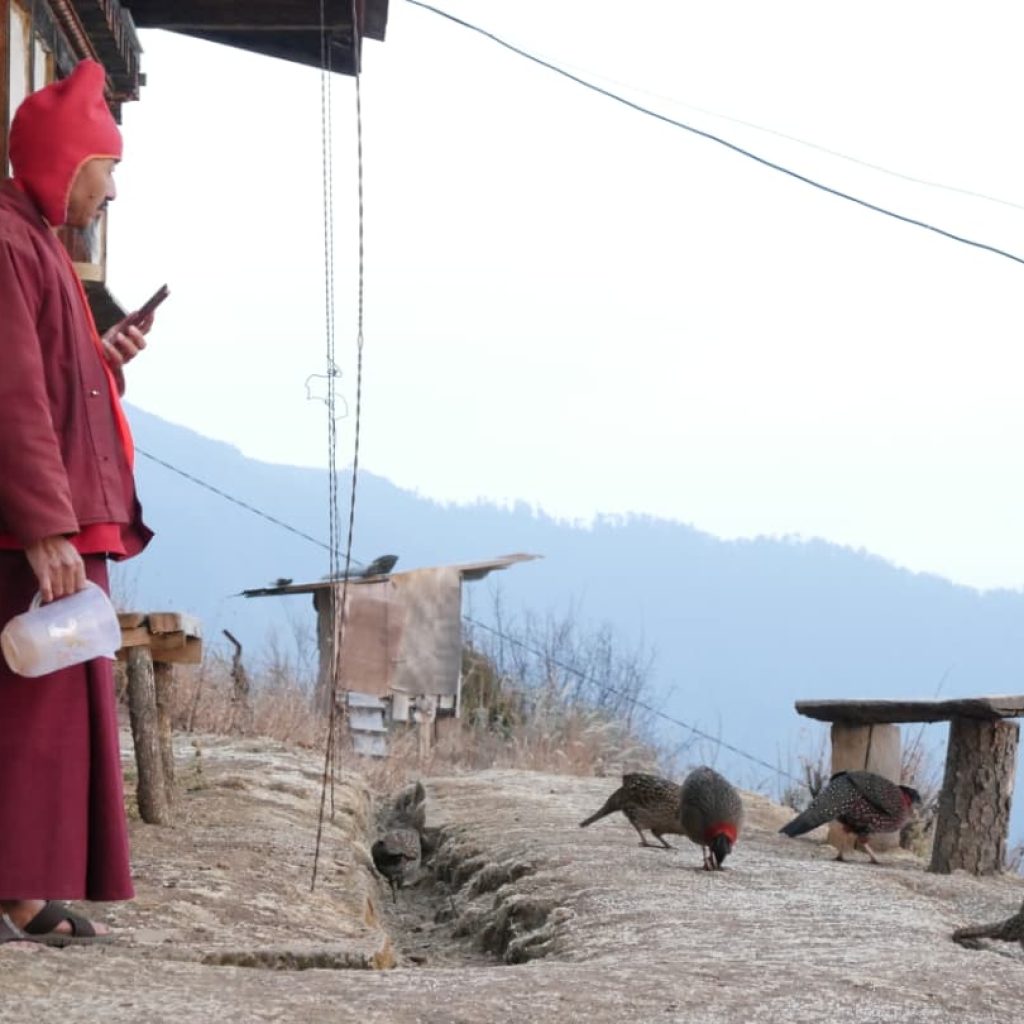
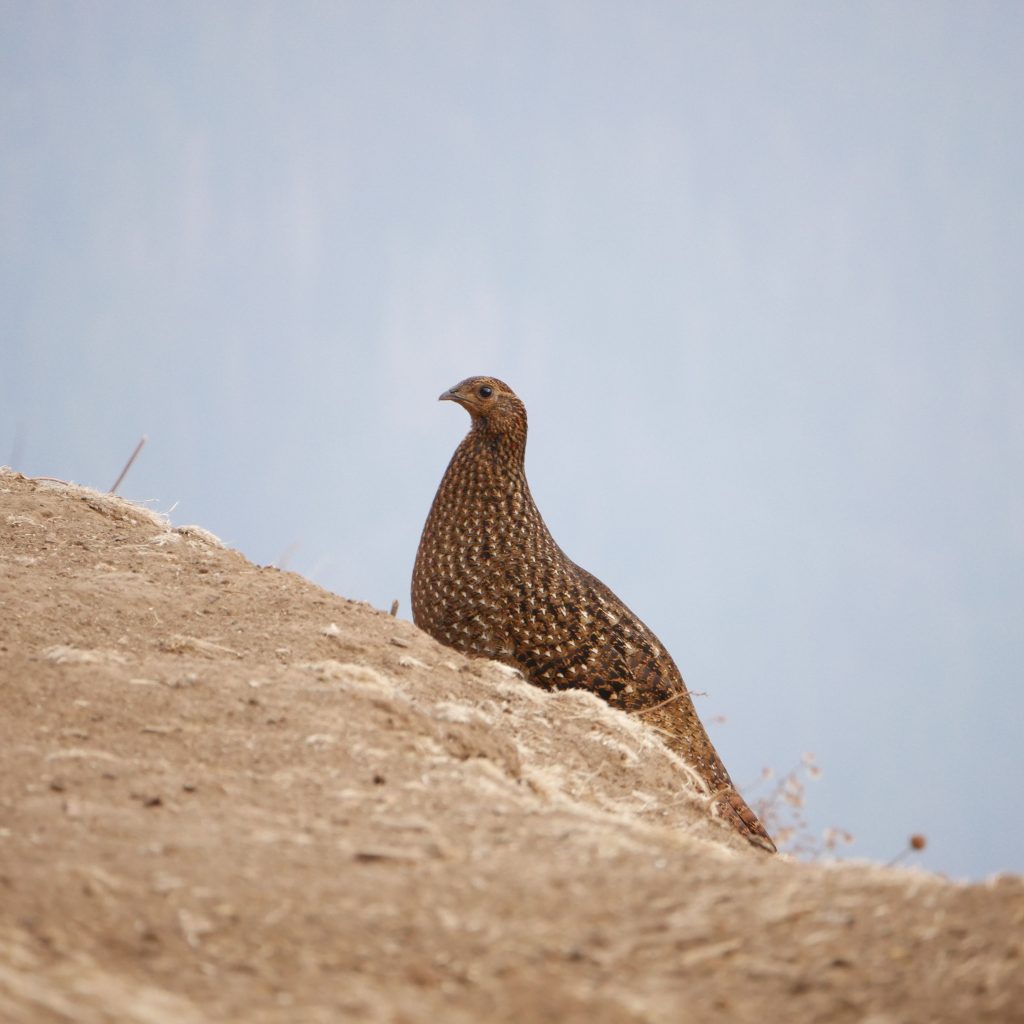
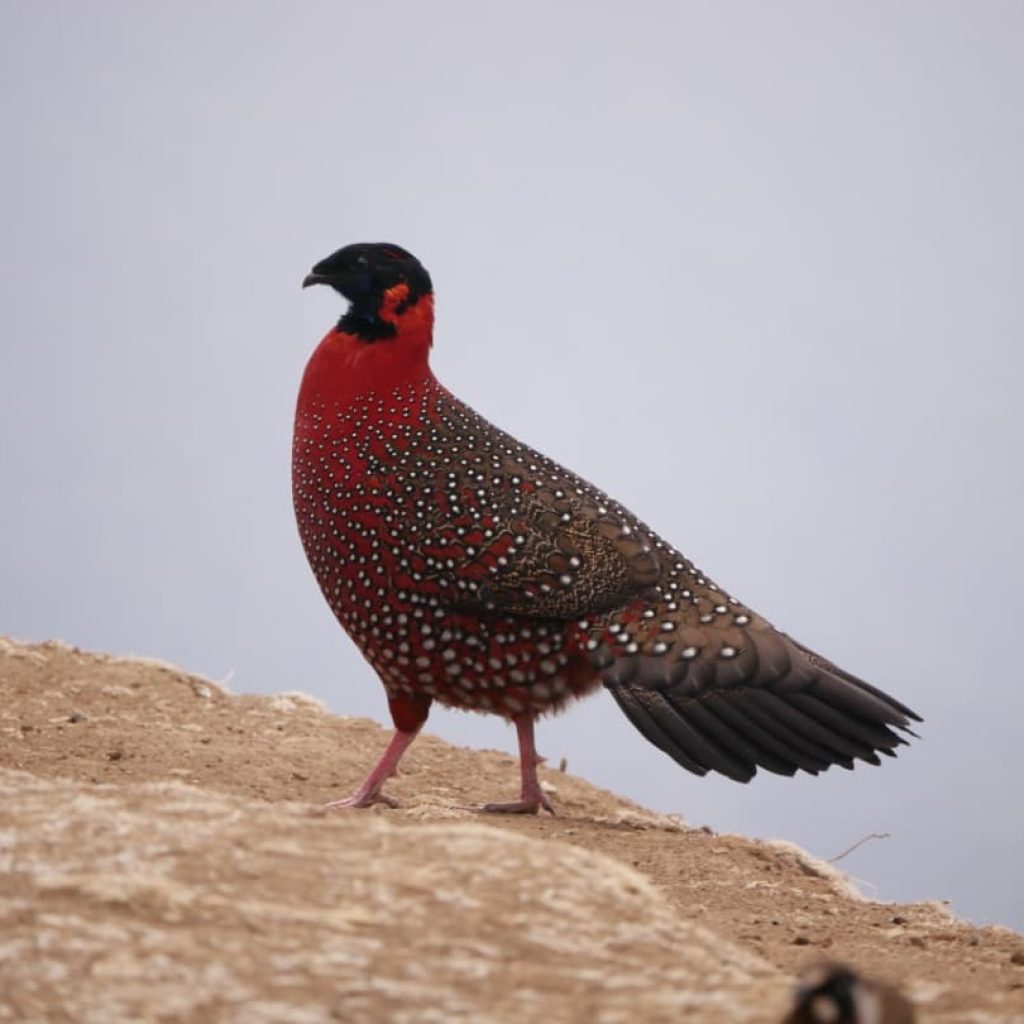
At exactly 5:23 p.m., a hermit emerged quietly from his hermitage, carrying a bowl of rice. After completing his evening prayers, he began scattering the rice onto the ground as an offering. He calmly informed us that the birds would likely appear within ten minutes. True to his word, the first to reveal herself was a lone female Satyr Tragopan, known scientifically as Tragopan satyra. She stepped cautiously into view, her beautifully patterned plumage blending almost perfectly with the floor. We photographed her extensively, careful not to make any sudden movements.
Within minutes, more members of her family joined her, emerging cautiously from the undergrowth. The sight of the group together was extraordinary, but photographing them proved challenging. The light was fading quickly as dusk approached, and the temperature dropped sharply. Low light conditions made focusing difficult, and the cold began to numb our fingers. At times, it felt as though we could barely press the shutter button. Despite the discomfort, the experience was unforgettable.
Eventually, the cold became too intense to endure. We retreated to the Lama’s residence to warm ourselves by the fire. The room was cozy and inviting, offering welcome relief from the freezing mountain air. To our pleasant surprise, the Lama had prepared a delicious chicken dinner for us. We couldn’t help but laugh at the irony; dedicated bird lovers enjoying a chicken meal after spending hours photographing rare pheasants. Over dinner, we shared stories and laughter with the Lama, engaging in meaningful conversations that deepened our appreciation for the spiritual and natural harmony of the place. Exhausted from the hike and chilled from the evening air, we slept soundly in the warmth of the room.
The next morning, my friend Mani woke up around 6:30 a.m. Determined to start a fire, he searched for kerosene but was unable to find any. After a moment of hesitation, he decided to improvise and used old paper to ignite the fire. Though the flames started small, they quickly grew strong enough to warm the room. We enjoyed a quick cup of coffee before setting out once more.
At 6:59 a.m., we began our short trek back to the same spot where the hermit scattered rice for the pheasants. By 7:15 a.m., we had reached the location and prepared our cameras once again. The morning air was crisp and clear, though a slight haze lingered in the valley below. At 7:23 a.m., the hermit stepped out of his hermitage and repeated his ritual of scattering rice.
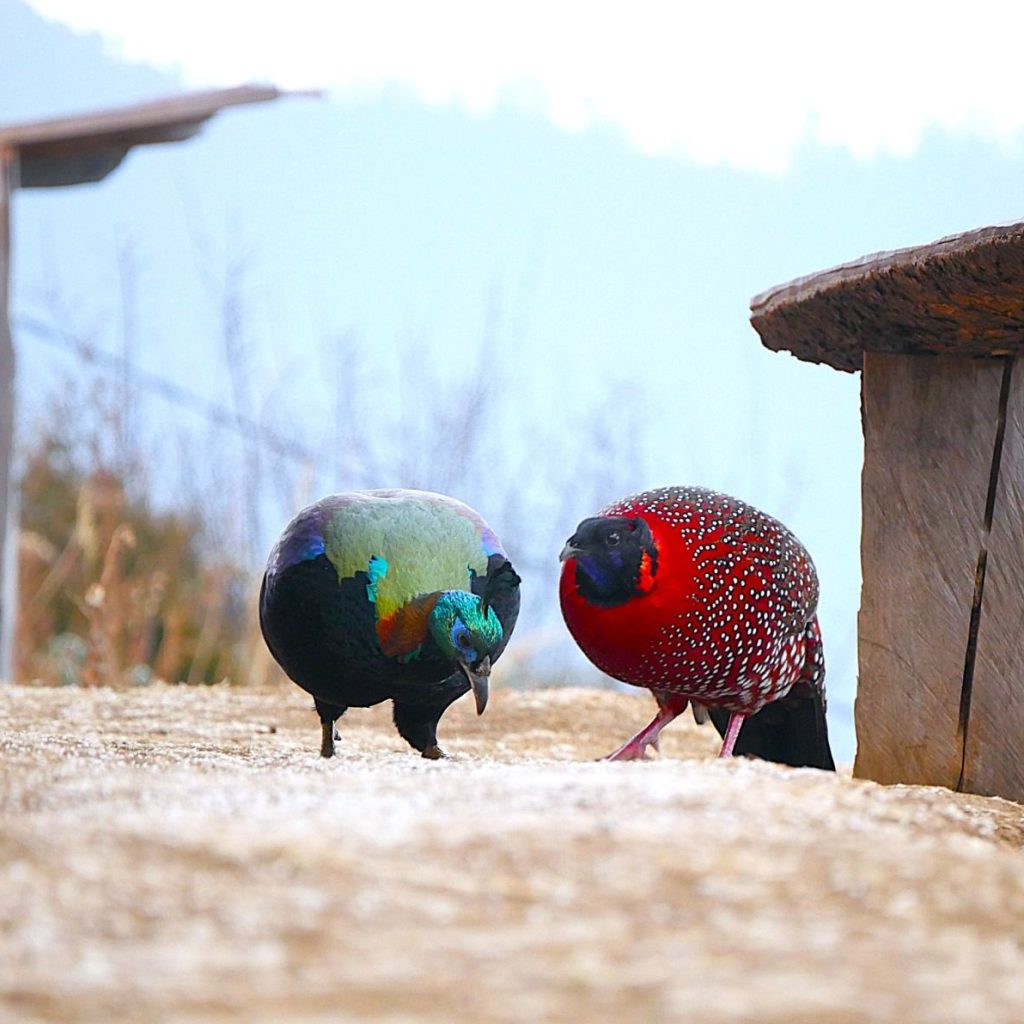
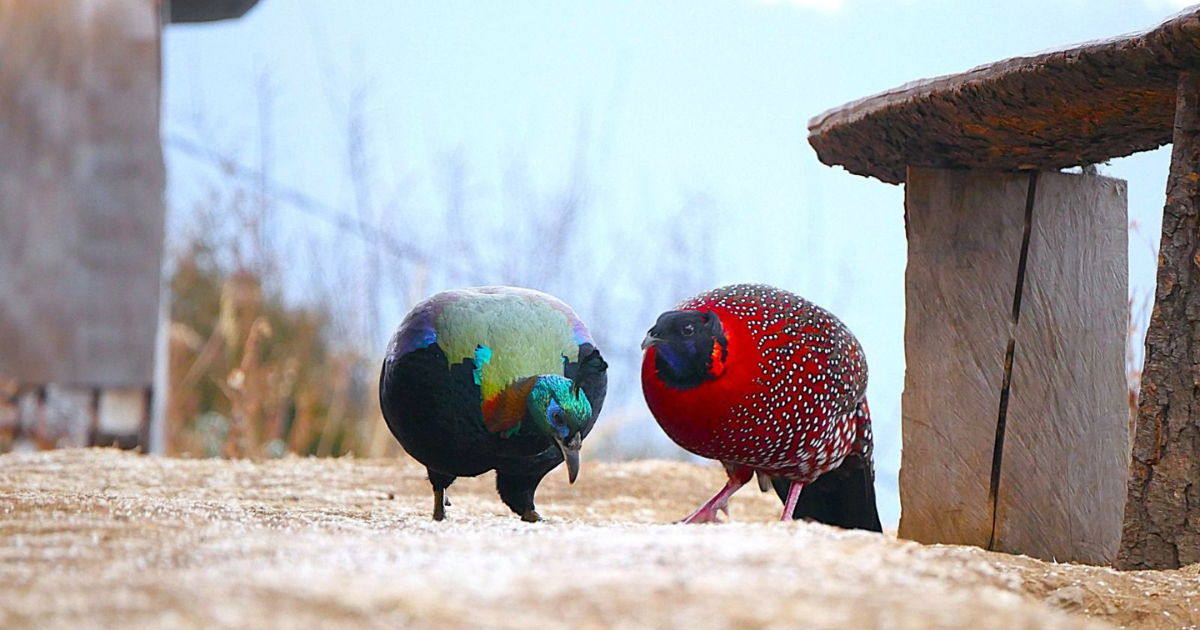
Around 7:30 a.m., we were rewarded with the magnificent sight of a male Himalayan Monal, scientifically known as Lophophorus impejanus. The bird shimmered brilliantly in the morning sunlight, its iridescent plumage glowing with shades of blue, green, and copper. Shortly afterward, the Satyr Tragopan reappeared. For a brief and magical moment, both species shared the same frame, offering us an exceptional photographic opportunity. Although the early morning haze and shifting light conditions were not ideal, the encounter was extraordinary.
After this remarkable session, we continued exploring the surrounding alpine forest and photographed several other high-altitude bird species. The peaceful atmosphere of the mountains, combined with the thrill of wildlife photography, made the experience deeply fulfilling.
Later, we returned to the Lama’s residence for breakfast. After eating, we packed our belongings, expressed our gratitude for the Lama’s generous hospitality, and began our descent back to the base. The journey had been physically demanding, yet spiritually enriching and photographically rewarding. The memory of those rare pheasants stepping quietly into view against the Hermitage backdrop remains one of the most remarkable wildlife experiences we have ever had.
List of Species observed:
- Himalayan Monal
- Satyr Tragopan
- Yellow-billed Blue Magpie
- Coal Tit
- Rufous-vented Tit
- White-browed Fulvetta
- Black-faced Laughingthrush
- White-collared Blackbird
- White-throated Redstart
- Alpine Accentor
- White-winged Grosbeak
- Himalayan White-browed Rosefinch
- Plain Mountain Finch
- Spotted Laughingthrush
0 Comment