

On 23rd February 2026 at 1:43 PM, we set out on our second expedition, filled with quiet excitement and a sense of unfinished purpose. Our destination was the serene and sacred Paro Charee Tsen Goenpa, perched high above the Paro valley. The monastery, known for its spiritual significance and remote beauty, also shelters one of the most magnificent birds of the Himalayas—the elusive Himalayan Monal.
The journey upward was an adventure in itself. The road wound steadily uphill for nearly twelve kilometers, a climb that took us about an hour and fifteen minutes. With every turn, the valley stretched farther below, and the crisp mountain air grew cooler and purer. Pine forests bordered the narrow road, their scent drifting through the open windows. The sky was clear, brushed with soft winter light, promising a calm and rewarding afternoon.
As we reached the very end of the motorable road, we were warmly greeted by the lama of the monastery. His presence added a sense of calm dignity to the rugged mountain setting. With gentle gestures and welcoming smiles, he guided us toward the monastery complex. The ancient structure stood quietly against the mountainside, prayer flags fluttering in the breeze, whispering blessings into the vast Himalayan sky.
Inside, we were offered tea and simple snacks. The warmth of the tea was comforting after the uphill drive, and the hospitality of the lama reflected the timeless Bhutanese tradition of kindness toward travelers. The peaceful environment seemed to slow time itself. For a moment, we forgot our anticipation of spotting the monal and simply absorbed the stillness of the monastery.
After some rest, we decided to hike a little further uphill to increase our chances of sighting the Himalayan Monal. The forested slope above the monastery appeared promising—rocky ridges, scattered shrubs, and open clearings provided ideal habitat. The monal, often described as the “jewel of the mountains,” thrives in such high-altitude ecosystems. With cameras ready and hopes high, we carefully climbed the uneven trail.
However, the mountain had other plans. Despite scanning every ridge and listening closely for movement, we found no sign of the bird. The silence felt heavy. The initial excitement slowly turned into mild disappointment. Perhaps the birds had retreated deeper into the forest, or maybe they sensed our presence long before we arrived. For a brief moment, dismay settled in.
Accepting our temporary defeat, we began our descent toward the monastery. The late afternoon sun was lowering, casting long golden shadows across the ridge lines. Then, as if gifted by patience itself, we saw it.
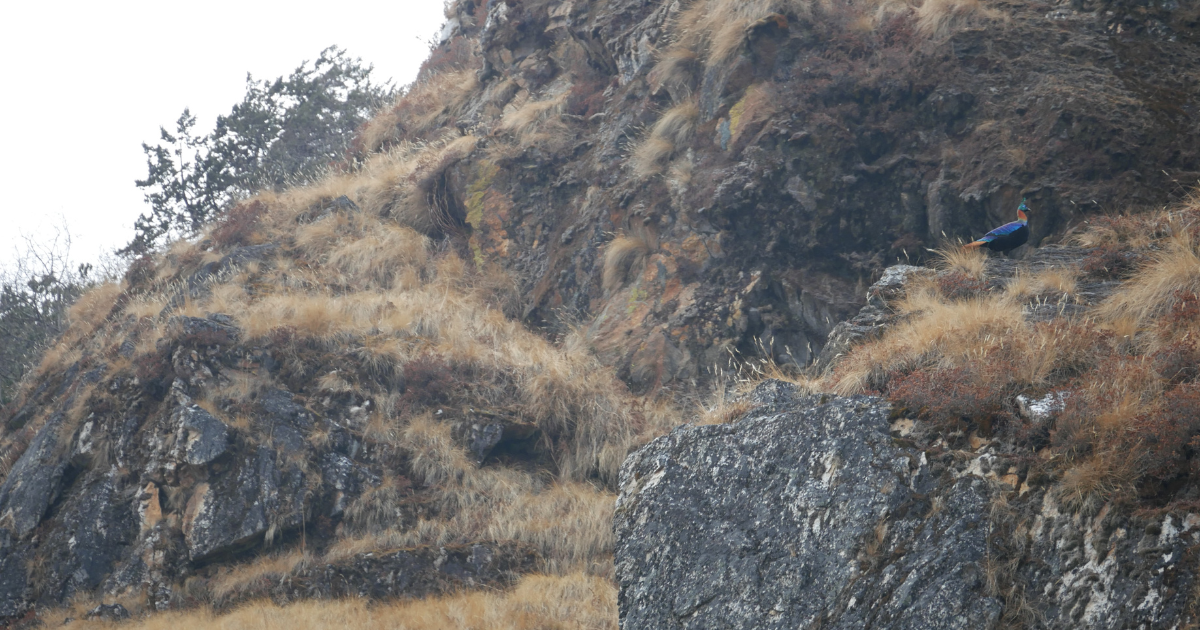
Standing tall on a distant ridge was a male Himalayan Monal.
The bird appeared majestic and alert, its posture upright, scanning the surroundings for threats. Even from afar, its iridescent plumage shimmered subtly in the fading light—metallic greens, blues, and copper tones blending into the mountain landscape. It was a breathtaking sight. The earlier disappointment instantly dissolved into awe.
We quickly positioned ourselves and began photographing. Though the distance between us and the bird was considerable, the composition was perfect. The vast Himalayan backdrop, the layered ridges, and the natural habitat created a harmonious blend. The landscape and the monal seemed inseparable, each enhancing the beauty of the other. It was not just a photograph of a bird—it was a portrait of wilderness itself.
With hearts still racing from the sighting, we returned to the monastery grounds. There, to our surprise, three female monals were feeding on scattered rice near the compound. Their earthy brown plumage allowed them to blend more subtly into the surroundings compared to the vibrant male. A few more females descended gently from the hillside, joining the group. Their cautious yet graceful movements reflected the delicate balance between survival and serenity in the wild.
Moments later, we noticed the male monal again. He was descending slowly from a distant slope, moving steadily toward a chorten near the monastery. Step by careful step, he approached closer, his radiant colors becoming more vivid in the soft evening glow. This time, we were rewarded with an even better photographic opportunity. The chorten, the monastery walls, and the golden hues of dusk framed the bird beautifully. It was a rare and perfect blend—spiritual heritage meeting untamed nature.
As dusk deepened, the mountains turned shades of violet and amber. The lama kindly invited us to stay for dinner. Grateful and humbled by the day’s experiences, we accepted. Over a simple yet hearty meal, he shared a brief history of the monastery—its origins, its spiritual importance, and its connection to the surrounding land. Listening to him, we realized that the monastery and the monals share more than just space; they share a timeless coexistence shaped by respect and harmony.
The Himalayan Monal is not merely a bird inhabiting these slopes—it is a symbol of resilience, beauty, and ecological balance. Watching it move freely near sacred grounds felt symbolic, as though nature and spirituality were intertwined in silent understanding.
When we finally began our return journey, the night air was crisp and calm. The road that had seemed long and winding earlier now felt gentle and reflective. We carried back more than photographs—we carried memories of patience rewarded, landscapes perfectly blended, and the quiet wisdom of the mountains.
Our second expedition to Paro Charee Tsen Goenpa was not just about spotting a bird. It was about experiencing the rhythm of the Himalayas—the waiting, the silence, the sudden wonder, and the profound connection between wildlife and sacred spaces. We returned satisfied, grateful, and inspired, already knowing that the mountains would call us again.
0 Comment