
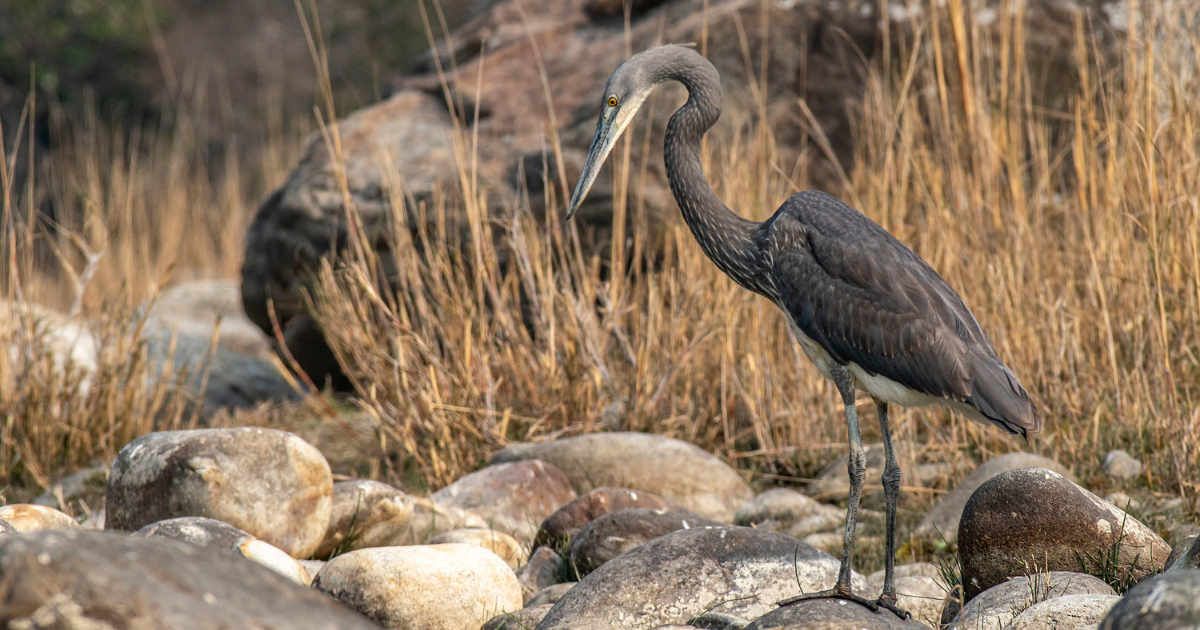

In the quiet river valleys of Bhutan, where mist rises gently from fast-flowing turquoise waters, lives one of the rarest birds on Earth, the White-bellied Heron, known scientifically as Ardea insignis, this majestic and critically endangered species is not just a bird for Bhutan; it is a symbol of responsibility, conservation, and hope.
For birdwatchers visiting the kingdom, a sighting of this heron is not merely a checklist achievement; it is a profound wildlife experience.
A Global Rarity with a Bhutanese Stronghold
The White-bellied Heron is listed as Critically Endangered on the IUCN Red List. Fewer than 60 individuals are believed to remain worldwide, with Bhutan holding the most significant surviving population.
Unlike many herons that inhabit wetlands and marshes, this species prefers:
- Remote, wide river systems
- Undisturbed sandbanks and river islands
- Clear, fast-flowing Himalayan rivers
- Subtropical and temperate forest corridors
In Bhutan, it is most reliably associated with river basins in the eastern and central districts — areas where conservation efforts are strongest.
Where to See the White-bellied Heron in Bhutan
While sightings are rare and never guaranteed (as they should be), dedicated birding expeditions may explore habitats within:
Royal Manas National Park
Southern Bhutan’s lowland river systems offer potential habitat along undisturbed stretches.
Jigme Singye Wangchuck National Park
Central Bhutan’s river corridors provide critical breeding and feeding grounds.
Zhemgang District
Widely regarded as one of Bhutan’s key conservation landscapes for the species.
These areas require patience, ethical field practice, and deep respect for habitat sensitivity.
Identifying the White-bellied Heron
Standing over 1.2 meters tall, the White-bellied Heron is one of the largest heron species in the world.
Key features include:
- Dark grey body and wings
- Distinct white belly (visible in flight)
- Long, powerful yellowish bill
- Slow, deliberate flight with deep wingbeats
Often solitary and extremely cautious, it prefers quiet riverbanks at dawn and dusk. Observations are usually from a distance to avoid disturbance.
Bhutan’s Conservation Commitment
Bhutan has become the global leader in White-bellied Heron conservation.
Efforts include:
- River habitat monitoring
- Nest protection programs
- Community awareness initiatives
- Hydropower impact mitigation studies
- Artificial incubation and chick-rearing programs
The Royal Society for Protection of Nature (RSPN) plays a leading role in safeguarding the species, working closely with local communities and park authorities.
In Bhutan, conservation is not an afterthought — it is embedded in national philosophy. With over 70% forest cover and a constitutional mandate to maintain environmental integrity, Bhutan provides the kind of refuge this species desperately needs.
A Birding Experience Rooted in Responsibility
At Trogon Travels, we approach White-bellied Heron birding with strict ethical guidelines:
- No playback calls
- No close nest approach
- Observation from safe distances
- Small group sizes
- Coordination with park authorities
This species is incredibly sensitive to disturbance. Responsible birding ensures that tourism contributes to conservation rather than pressure.
For serious birders and conservation-focused travelers, the experience is deeply humbling — standing quietly beside a Himalayan river, scanning the sandbanks, knowing you are searching for one of Earth’s rarest birds.
Why the White-bellied Heron Matters
The survival of the White-bellied Heron reflects the health of Bhutan’s river ecosystems. Protecting it means protecting:
- Freshwater biodiversity
- Riverine forests
- Local fishing communities
- Entire watershed systems
In many ways, this bird is an ambassador for Bhutan’s broader environmental vision.
0 Comment